

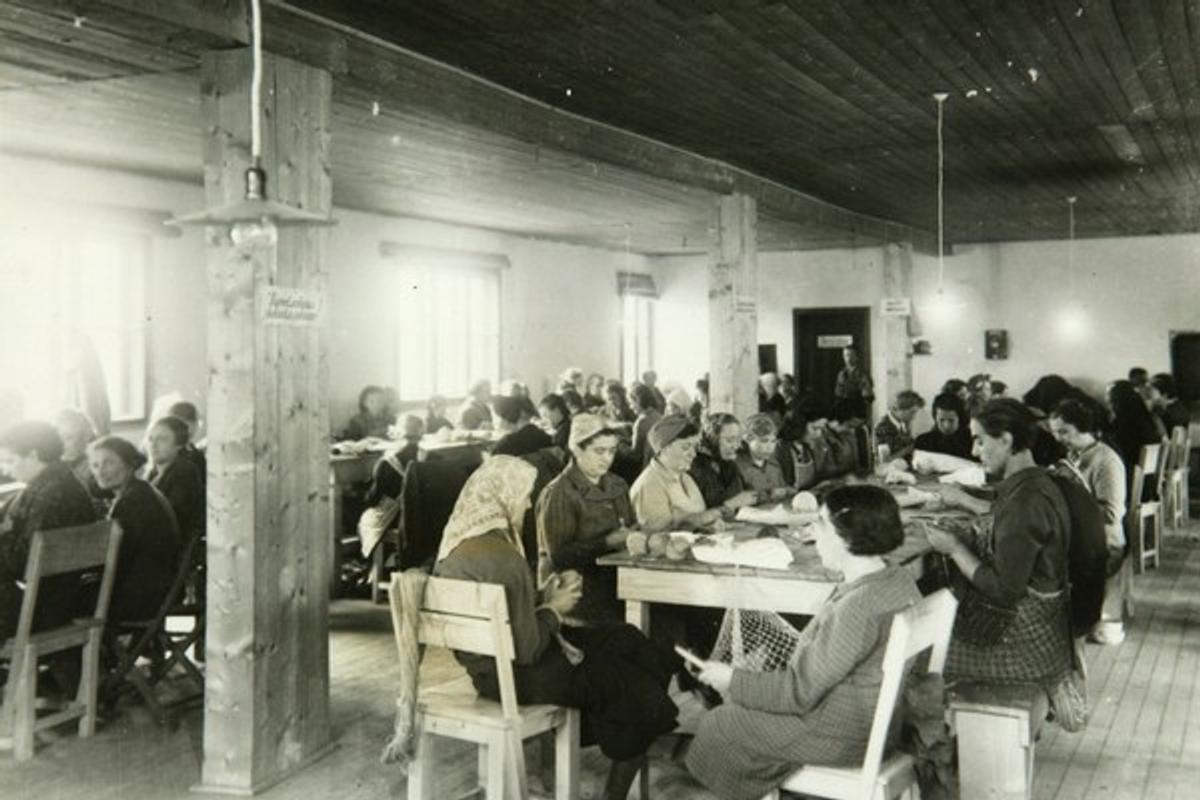
From forced labour to deportation hub
Sereď was created by the Slovak State as part of its anti‑Jewish system after the Jewish Codex, initially holding Jewish men for forced labour under harsh, state‑run conditions. Its function widened as it became a key collection and transit site for deportations in 1942 and again after 1944, with Slovak administrators cooperating closely with German SS units in organising registration, detention, and transport to Auschwitz and other camps. The camp demonstrates how persecution in Slovakia advanced in stages—from exclusion to exploitation to deportation and death—and shows that the Holocaust there was enabled and implemented through Slovak state structures, not imposed solely by external German pressure.
„Approximately 16,000 passed through the camp in Sereď alone, most of whom perished during the Holocaust.“
Slovak National Museum – Museum of Jewish Culture, Sereď Holocaust Museum