The Jewish minority in the Czech Republic is relatively small; there are academic debates regarding its exact definition and size, whether based on religion or ethnicity. The minority is guaranteed a range of rights and freedoms in line with European standards. Antisemitism in the Czech Republic today is generally less widespread than in other parts of Central and Eastern Europe; nevertheless, it continues to pose a latent security threat.
It draws in part on long-standing traditions of various forms of antisemitism in the Czech lands, and in part adopts contemporary narratives from the global context. In addition to historical currents of pan-Slavic antisemitism, neo-Nazi groups and individuals, and the legacy of communist anti-Zionism (which mostly merely masked antisemitic stereotypes), recent decades have also seen the rise of Islamist antisemitism and the anti-Zionism of the so-called “New Left” (which, however, often contains more or less hidden antisemitic attitudes). The internet and the rise of new social media platforms have significantly contributed to the increase in antisemitic expressions, a trend that accelerated during the COVID-19 pandemic (which was linked to various antisemitic conspiracy theories, such as those regarding financial gains from vaccination). Since October 2023, the conflict between Israel and its enemies has dominated the formulation of antisemitic narratives. Hatred of Israel has also manifested in attacks on the Jewish community in the Czech Republic.
Antisemitic speech can be identified primarily in the spread of hateful statements and conspiracy theories on the internet. However, violent threats also originate from the online space, and it is there that plans for antisemitic actions in the physical world are hatched. Outside the online sphere, verbal attacks, antisemitic graffiti and stickers, and symbolic damage to Jewish properties are also prevalent. However, there have also been cases of planning and attempts to carry out serious attacks against both property and people. The danger is further heightened by the transnational interconnectedness of the antisemitic scene, which is again particularly evident in the digital environment but also has repercussions in the physical world, both in the Czech Republic and abroad.
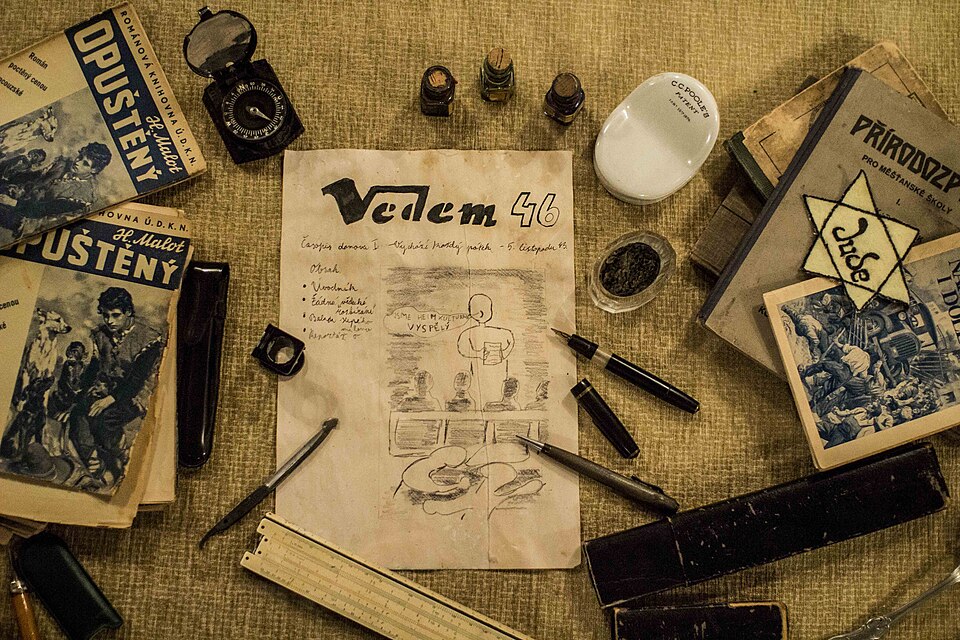
Terezín is a key site of Holocaust memory in Central Europe. Once a fortress town, it became a ghetto and transit camp where Jewish people from across the region were imprisoned and deported during the Second World War. The video reflects on the importance of remembrance, education, and historical truth. Through the spaces of Terezín, archival materials, and educational visits, it shows how the history of antisemitism remains connected to the present — especially in the face of denial, distortion, and contemporary forms of hatred.
HISTORICAL BACKGROUND AND POSTWAR CONTROVERSIES
Jewish history in the Czech lands dates back more than a thousand years. It has been an integral part of shaping the character of the region. Prague, in particular, became one of the most influential Jewish centers in Europe. However, at various times, the Jewish population faced, to a greater or lesser extent, exclusion, discrimination, and occasional brutal escalations of violence against them. From the late 19th century onward, traditional forms of antisemitism—which were primarily religiously motivated—were succeeded by new forms linked to the rise of both Czech and German nationalism (though these nationalisms were hostile toward one another, they identified a common enemy in the Jews). Although Jewish and Zionist groups enjoyed relatively strong political support during the First Czechoslovak Republic from 1918 to 1938, the antisemitic spectrum was also visible and hateful.
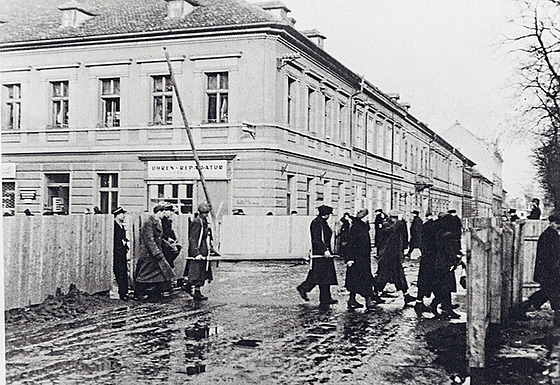
Antisemitic tendencies began to intensify in the so-called Second Republic at the turn of 1938–1939 and were also evident in the occupied border regions (e.g., during the so-called Kristallnacht in November 1938 in the Sudetenland). A tragic escalation occurred following the occupation of the Czech lands in 1939. In the Protectorate of Bohemia and Moravia and in the occupied border regions, Jews were systematically stripped of their rights, expropriated, deported, and murdered. Terezín (in German, Theresienstadt) played a significant role. A ghetto was established in the fortress there, through which Jews were sent to extermination camps; however, many perished directly in Terezín. The Nazis did not shy away from staging, for propaganda purposes, a supposedly happy life for Jews in this ghetto. During the war, approximately 80,000 Jews from the Czech lands were exterminated (though figures vary), and thousands more emigrated just before or during the war. A large wave of emigration to Israel followed the war. This led to a fundamental transformation of the Jewish presence, as this minority became much less visible—both demographically and culturally—than it had been previously.
Even after 1945, however, Jews—including those returning from concentration camps—faced various forms of prejudice and a reluctance to return their confiscated property. Fortunately, however, there were no anti-Jewish pogroms at that time, as had occurred in some other countries of Central and Eastern Europe. Czechoslovakia’s temporary assistance to Israel during and after its establishment did not lead to long-term improvement. After the Communists seized power in 1948, rhetoric that outwardly employed anti-Zionist narratives was used to spread antisemitism. This pattern was repeated in campaigns after 1967, when diplomatic relations between Czechoslovakia and Israel were severed. A specific politics of memory regarding the Holocaust selectively emphasized the role of Communist anti-fascism while neglecting the broader context of the Jewish Holocaust. It is a fact, however, that the “real socialism” regime did intervene against openly antisemitic outbursts—for example, those by young neo-Nazi groups—even as it sought to shift the blame for such attitudes among youth onto influences from the West.
MEMORY, RESPONSIBILITY, AND DEMOCRATIC RESILIENCE
After the fall of communism in 1989, new opportunities arose for the Jewish minority to thrive and for the commemoration of Jewish history and culture in the Czech lands. A large portion of the political leadership has supported and continues to support relations with Israel as well as the rights of the Jewish minority in the Czech Republic, including property restitution to Jewish organizations. Expressions of philo-Semitism are also emerging among the public, including young people.
However, the free environment has also allowed for a rise in antisemitism, which in the 1990s was mainly associated with conspiracy circles surrounding antisemitic periodicals and neo-Nazi and neo-fascist skinheads. Later, it took on more sophisticated forms. Global Islamist antisemitism and “New Left” antisemitism are also evident in the Czech Republic.
The fight against antisemitism is an important part of building a resilient democracy. The Jewish minority—though small in number—is itself actively involved in protecting its own rights and ensuring a dignified life. This includes historical memory, such as respect for the victims and survivors of the Holocaust. Various aspects of this are addressed in the government’s Strategy for Combating Antisemitism in the Czech Republic for 2025–2030.