

Collective Blame and Public Hostility
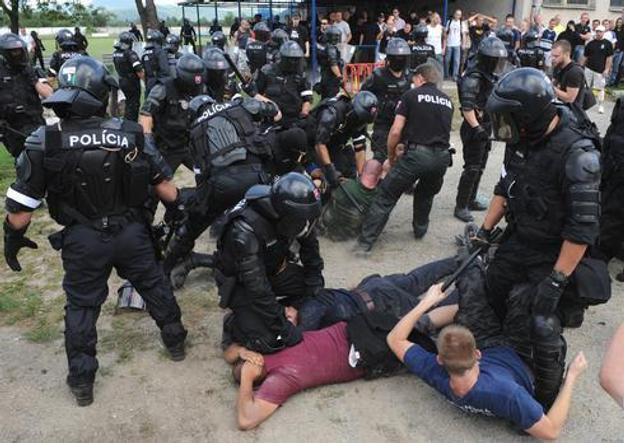
In the late 2000s, Slovakia saw a rise in local protests framed as responses to crime but collectively targeting Roma communities. These mobilizations relied on ethnic generalization, portraying Roma as inherently criminal and incompatible with majority society. In Šarišské Michalany, tensions escalated after violent crimes, including the murder of a shopkeeper and the assault of a pensioner by Roma individuals. Rather than focusing on individual responsibility, local actors demanded restrictive measures against the entire settlement, such as heavier policing and physical separation. The protest marked a shift from isolated hate crimes to publicly legitimized antigypsyism, normalizing collective punishment, reinforcing segregationist policies, and embedding prejudice in democratic discourse.
„Roma in Slovakia, as elsewhere across Europe, continue to face discrimination in access to education, housing and health services, and remain vulnerable to racist attacks and police ill-treatment.“
Amnesty International
Further Reading / Sources
Korzár/SME – “Polícia rozohnala protest extrémistov”
Regional SME/Korzár piece describing the protest as organised by extremists, noting participation of locals, police dispersal, and political reactions.
Video documentation – “8.8.2009 Pochod proti cigánom – Šarišské Michaľany” (YouTube)
Raw footage of the march, slogans, and police intervention; useful as visual context for your “Main Image” concept.
ERRC / NGO parallel report to UN (2013)
Parallel report on Slovakia documenting “anti‑Roma marches” and police ill‑treatment; refers to the 21 March 2009 assault on an elderly woman and the pattern of collective punishment rhetoric.