

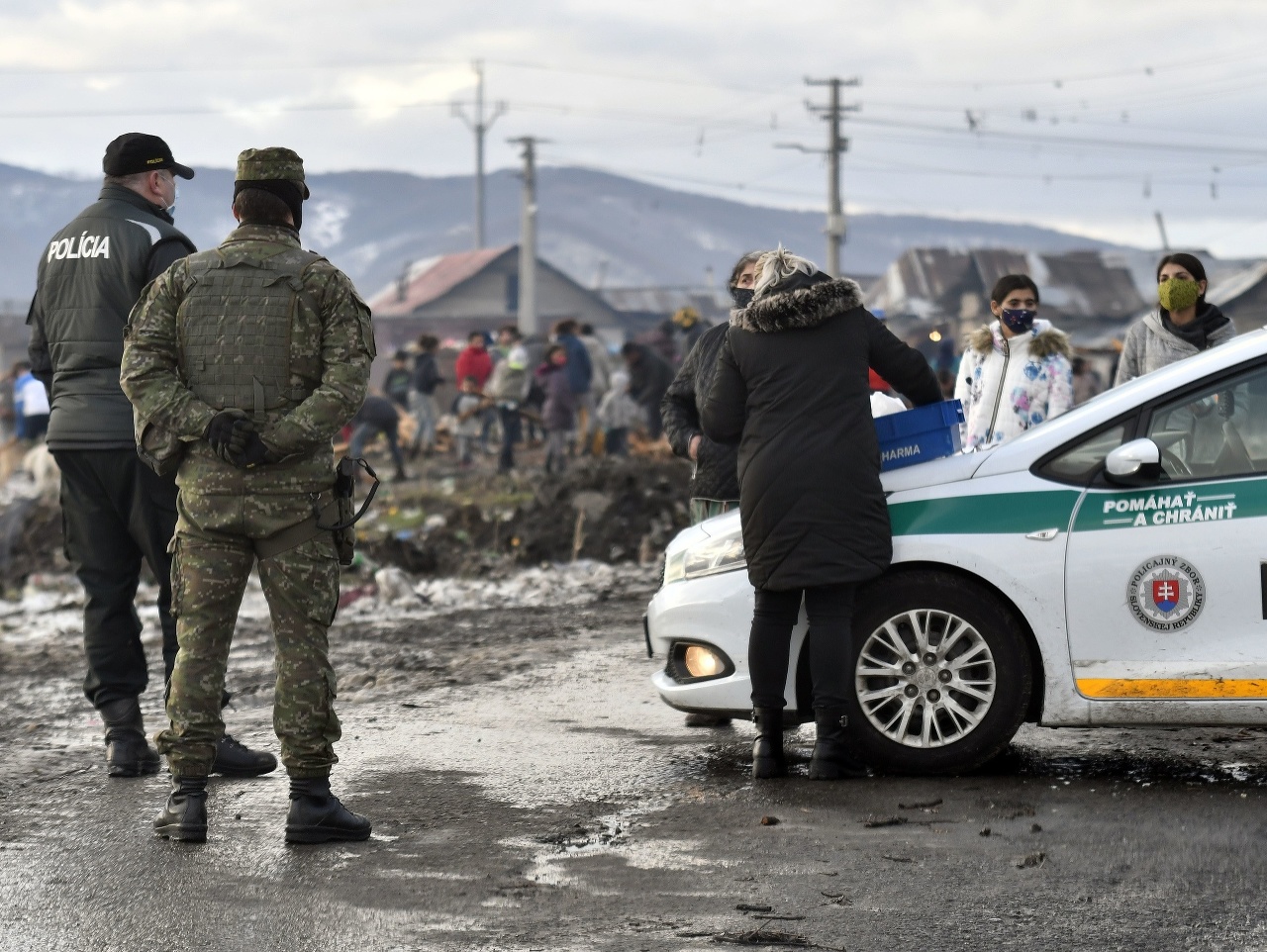
Collective containment under armed guard
After COVID‑19 testing detected infections in and around segregated Roma settlements, authorities restricted movement in and out of selected localities and deployed uniformed forces to enforce the measures. Entire communities were effectively treated as a single epidemiological unit, despite the principle that restrictions must be necessary, proportionate, and non‑discriminatory.
Human rights organisations cautioned that imposing measures on whole communities without evidence of collective risk invites arbitrariness and discrimination. In a context shaped by long‑standing antigypsyist stigma, the militarised approach reinforced perceptions of Roma as a threat to be contained rather than citizens entitled to equal protection and support.
„Any measures that deliberately target entire communities, without evidence that such communities present a danger for public health during the pandemic, are likely to be arbitrary and disproportionate, and may constitute discrimination.“
Amnesty International, Stigmatizing Quarantines of Roma Settlements in Slovakia and Bulgaria (17 April 2020)
Further Reading / Sources
Amnesty International (17 Apr 2020)
Stigmatizing Quarantines of Roma Settlements in Slovakia and Bulgaria
FRA (Apr 2020) – Slovakia report COVID-19 (Fundamental Rights Agency)
Council of Europe (ECRI) – 6th report on the Slovak Republic
SME / The Slovak Spectator – “NGOs criticise government for steps taken in Roma settlements” (15 Apr 2020)
Reports on “civil‑military operation Umbrella 1” in quarantined Roma communities, with NGOs warning that sealing off about 6,200 Roma under armed guard risks disproportionate and stigmatizing treatment
Romea.cz – “Slovakia will test Romani settlement residents for COVID‑19 and isolate infected people in state‑run facilities” (2020)
Explains that sample testing in Roma settlements was supervised by soldiers and highlights fears that measures single out Romani communities as infection “hotspots.”