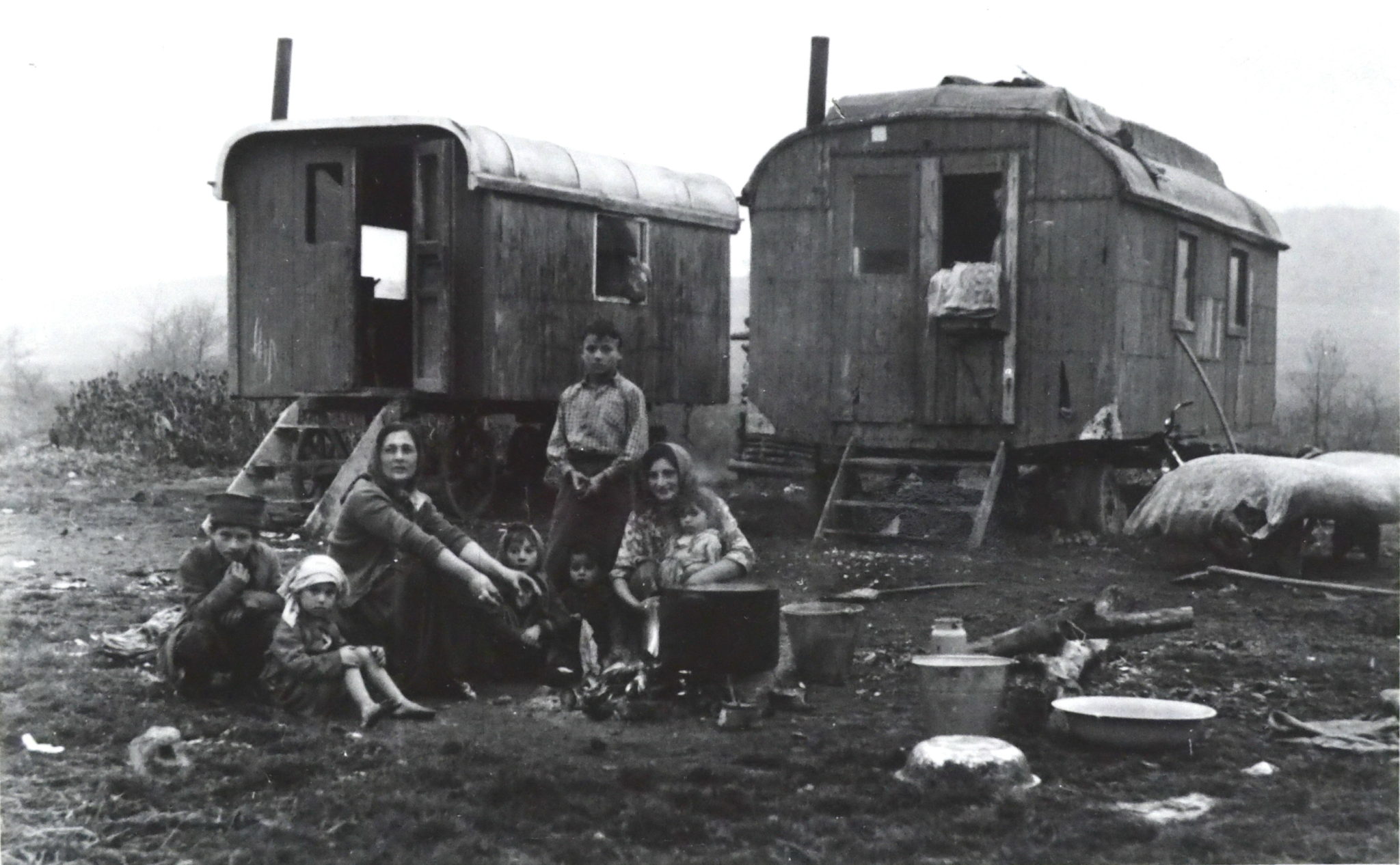
Spatial Segregation as State Policy
Under state‑socialist governance, Roma communities were subjected to centrally planned housing and settlement policies framed as modernization and integration. In reality, these measures formed part of broader assimilation efforts that displaced Roma families from established neighborhoods into peripheral estates, hostels, or isolated settlements. Local authorities, housing offices, and social services enforced relocations without meaningful consultation, moving households into overcrowded, substandard housing with poor access to work, education, healthcare, and infrastructure. These policies disrupted social networks, entrenched stereotypes linking Roma to poverty and marginality, and reinforced spatial segregation. Their long‑term impact persists today, shaping excluded localities and deepening inequalities between Roma and non‑Roma in Slovakia.
„The insensitive placement of Roma families, adapted to the disadvantaged environment of a settlement, among the majority population… often caused unsolvable problems in city housing estates, becoming a source of hate on both sides.“
Social Exclusion and Double Marginalisation: Roma in Slovakia after 1989
Michal Vašečka, Ethnicity Studies 5(3), 2003, p. 82
Further Reading / Sources
Romea.cz – “Czechoslovakia launched the forced resettlement of Romani people 53 years ago”
Explains Resolution No. 502/1965 and organised dispersion, including demolition of settlements and relocations from Slovakia to Czech lands
Romea.cz – open letter on Romani life in communist Czechoslovakia
Section on demolition of Romani neighbourhoods, relocation to industrial areas, and disruption of social bonds
Michal Vašečka – “Social Exclusion and Double Marginalisation: Roma in Slovakia”
Overview of communist‑era policies, including “insensitive and administrative (forcible) allocation of flats” and migration to cities/industrial areas
Habitat for Humanity – article on Košice Lunik IX
Explains later consequences of socialist and post‑socialist Roma housing policy on urban peripheries
T. Podolinská & A. Mann (eds.), Čierno-biele svety. Rómovia v majoritnej spoločnosti na Slovensku
Chapter(s) on housing and spatial exclusion in socialist and postsocialist periods
ERRC – “Separate, Unequal and Hazardous: The Essential Guide to Roma Housing in Slovakia”
Historical background plus current housing segregation, useful for continuity