

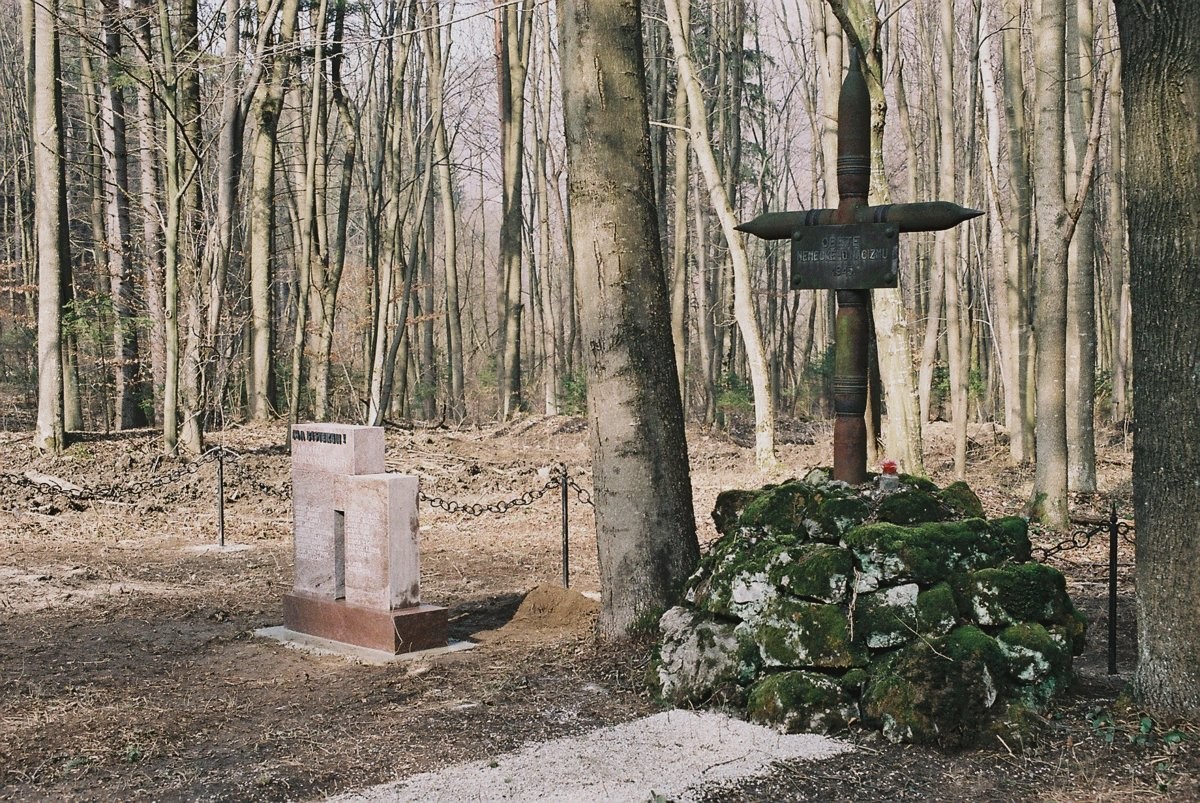
Targeting Roma as “Unreliable Elements”
After the German occupation of Slovakia following the 1944 Slovak National Uprising, Roma communities faced intensified persecution. In the Dubnica nad Váhom region, Roma men and women were detained under accusations of “unreliability,” “vagrancy,” or alleged partisan ties. They were sent to a local labor camp, established under the Ministry of National Defense and later overseen by SS units. Conditions were severe: overcrowded barracks, scarce food, and poor sanitation fostered disease, including a typhus epidemic in the camp. Amid this crisis, SS forces and Hlinka Guard members carried out mass executions, with witnesses recalling victims forced to dig pits before being shot. The massacre exemplifies the broader genocidal policy against Roma, systematically targeted as a racial group across Nazi-controlled Europe.
„During the mass execution, eighteen Roma were shot dead. Others were beaten and, together with those who had been shot, were buried in a pit and suffocated under piles of earth.“
Ústav pamäti národa (ÚPN)
23. február 1945 – Vraždy Rómov v Dubnici nad Váhom
Further Reading / Sources
Ústav pamäti národa – 23. február 1945 – Vraždy Rómov v Dubnici nad Váhom
Main narrative and figures, including the quoted passage
Romaholocaust.sk – Zaisťovací tábor v Dubnici nad Váhom
Slovak version with additional detail on camp history
Roma and Sinti Genocide website – entry “DUBNICA NAD VÁHOM (SK)”
Short international summary of the camp and massacre