

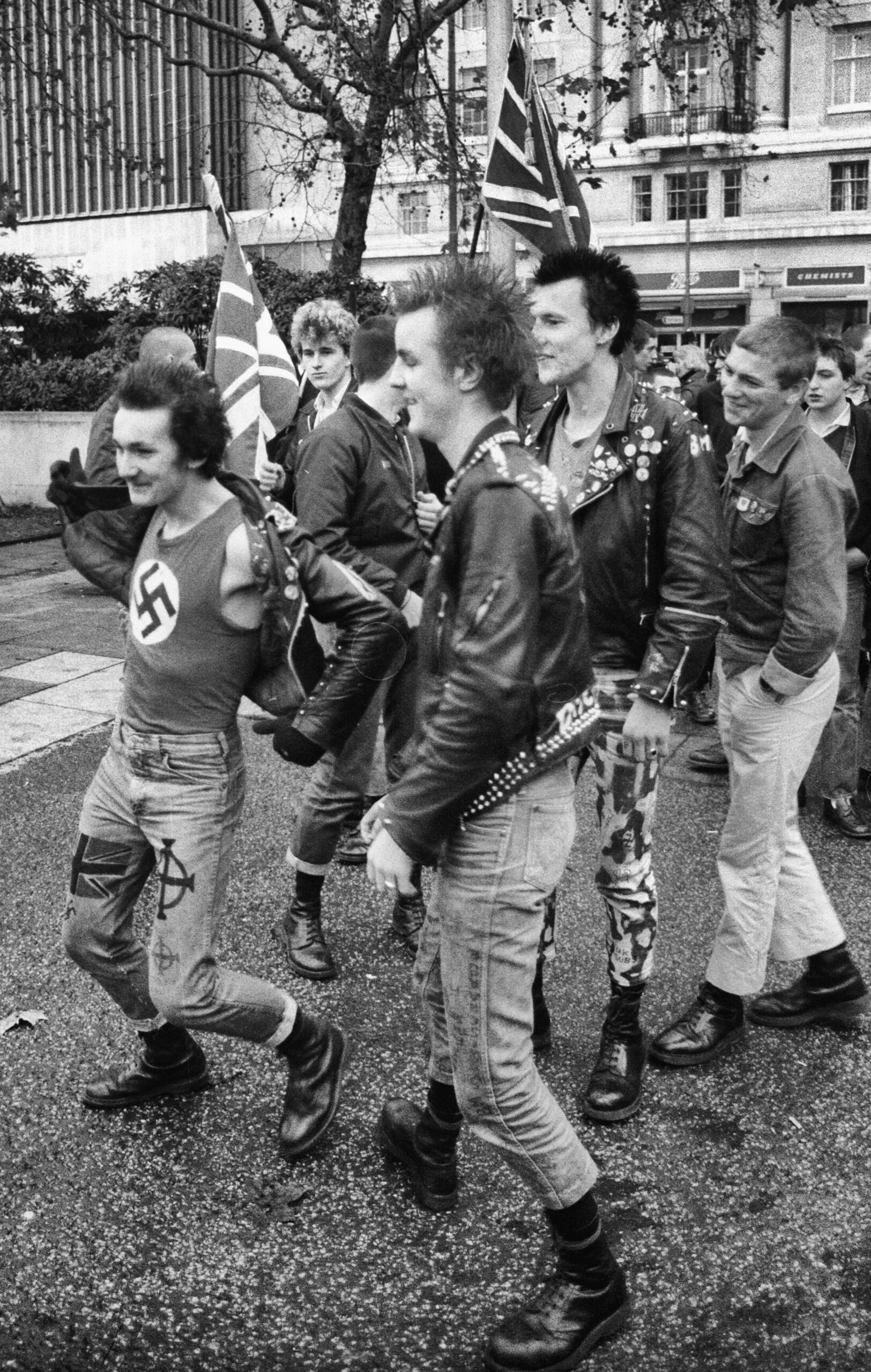

Import of racist violence from the West
In the daily report of the StB dated September 11, 1986, authorities noted the emergence of a group of young people in Česká Lípa who openly identified with the skinhead movement, expressed fascist sympathies, and concentrated their aggression ‘especially on attacking people of gypsy origin.’ This reflected a broader transformation within the youth neo-Nazi and racist spectrum in late socialist Czechoslovakia. The skinhead subculture, which had been spreading across Western Europe since the early 1980s, began to take root in Czechoslovakia, influenced by imported music (particularly Oi! and punk) and sensationalized coverage in foreign media. While non-racist and apolitical skinhead currents appeared later, the racist wing quickly gained traction, particularly in regions with existing social tensions. By the 1990s, Česká Lípa had become one of the notable centers of skinhead neo-Nazism in the Czech Republic.
“Justifying violence against Roma and foreign workers… and at the same time expressing anti-regime positions enticed the first individuals to constitute Czech skinheads.”
Miroslav Mareš
expert on extremism
Further Reading / Source
Specifika neonacistického hnutí skinheads na Liberecku (bachelor thesis)
Ceé, Vojtěch (2009), Pardubice: Univerzita Pardubice
Kultura svépomocí. Ekonomické a politické rozměry v českém subkulturním prostředípozdního reálného socialismu a postsocialismu
Daniel, Ondřej et. al. (2016), Praha: Filosofická fakulta Univerzity Karlovy
The Emergence of Skinheads in the ČSSR. Social Pathology and Prevention, 4 (2)
Rákos, Radek (2018)