

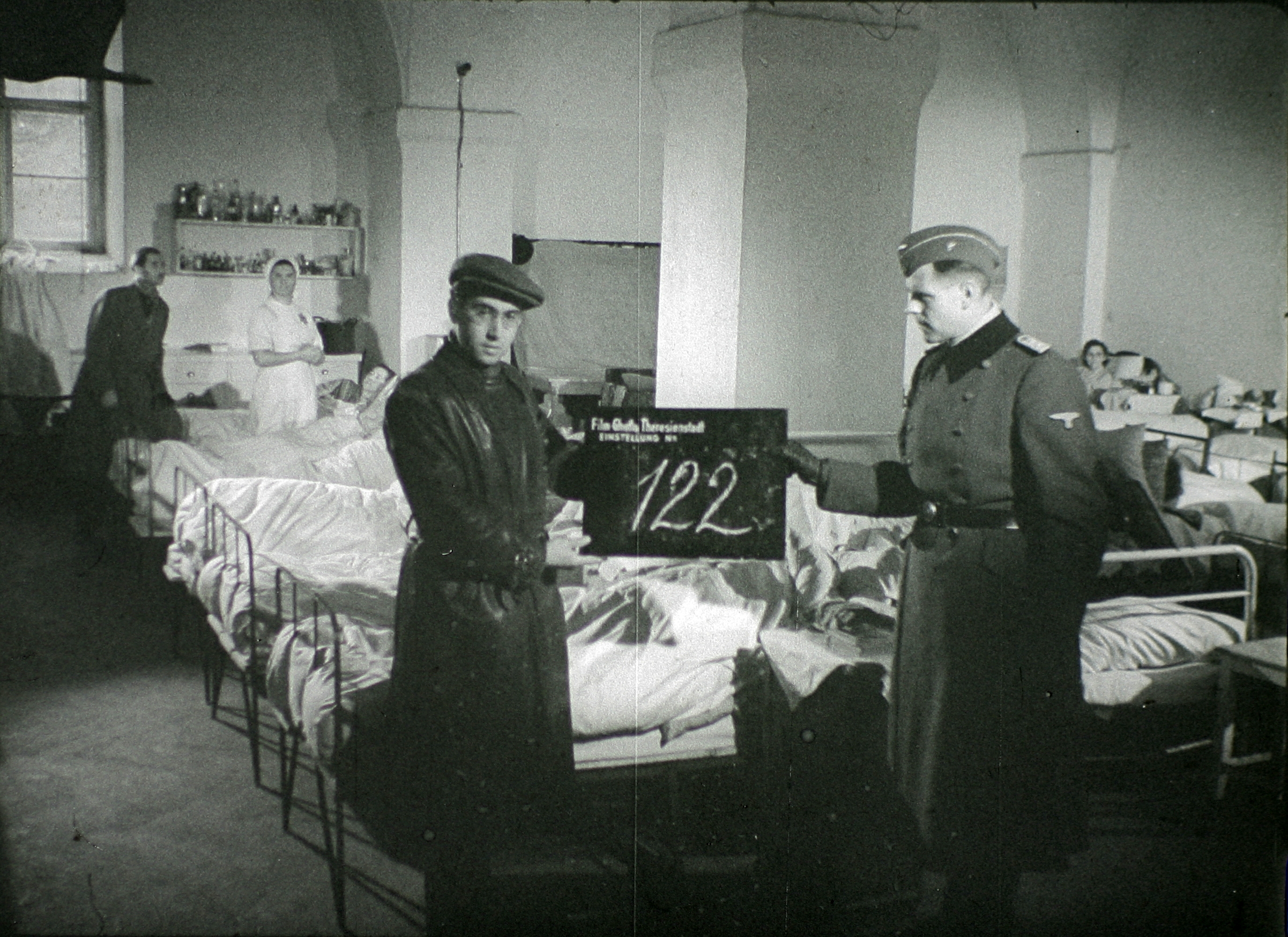
The genocide is denied and covered up
Although the Nazis had openly articulated their antisemitic ideology since the mid-1920s, the implementation of mass murder during the Second World War was deliberately concealed. The Nazi administration fostered the illusion that Jews were being resettled to eastern Europe for labour and “productive use,” a strategy designed to facilitate deportations and minimise resistance. This deception meant that many victims did not know their fate until the final moments in extermination camps such as Auschwitz-Birkenau.
From 1942 onward, Theresienstadt was presented in Nazi planning as a so-called “ghetto for the elderly,” allegedly offering Jews a peaceful life in retirement. In reality, living conditions were catastrophic: overcrowding, hunger, and disease were widespread, and after October 1942 the proportion of prisoners over the age of 65 dropped sharply due to mass deportations and deaths. As international concern about the fate of Europe’s Jews intensified in 1943, Theresienstadt was transformed into a central propaganda instrument intended to obscure the reality of genocide.
This strategy culminated in the extensive “beautification” campaign preceding the visit of the International Red Cross on 23 June 1944. Streets were decorated, cultural and sporting facilities staged, and fictitious shops, cafés, a bank, and local currency were created. Prisoners were carefully instructed on how to behave and what to say. The deception proved effective: the delegation largely accepted the Nazi narrative in its final report. In August and September 1944, a propaganda film reinforced this illusion, featuring scenes of concerts, the children’s opera Brundibár, and football matches. The same logic likely underpinned the so-called Theresienstadt Family Camp at Auschwitz-Birkenau, where deportees were temporarily kept alive for several months before being murdered, maintaining the appearance—however brief—of humane treatment within the genocidal system.
„In the barracks, they whitewash, spray, polish the lock on the gate, the handle, everything is painted, cleaned, smoothed, polished, straightened, refined, arranged, so that one day, when the time comes, it will seem like paradise where the Jews were.“
Karel Hartmann, Theresienstadt prisoner
author of the poetry book Theresienstadt Epic, murdered in Auschwitz in October 1944
Further Reading / Sources
Videodocument „Terezín – druhá světová válka“
Anna HÁJKOVÁ, Poslední ghetto: Všední život v Terezíně, Praha 2021
The Last Ghetto, Oxford 2020
Hans Günther ADLER, Terezín 1941-1945: tvář nuceného společenství I-III, Praha 2006-2007
Theresienstadt 1941-1945: The Face of a Coerced Community
Hannelore BRENNER-WONSCHICK, Děvčata z pokoje 28, Praha 2011
The Girls of Room 28: Friendship, Hope, and Survival in Theresienstadt, Schocken 2009
Final Solution: The Fate of the Jews 1933–1949
David CESARANI, London 2016