

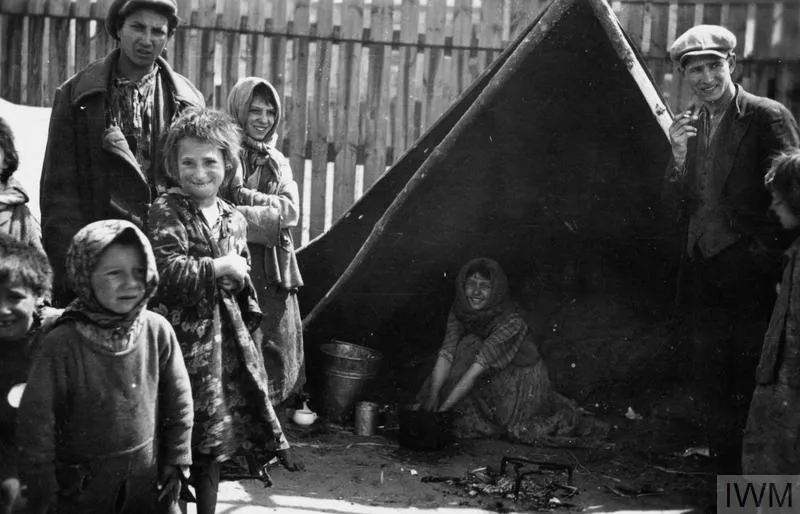
Forced labour as a system of anti-Roma persecution
Based on a decree issued by the Ministry of the Interior on 2 April 1941, so-called “labour units” were established for “asocials”, a category into which virtually all members of the Romani community could be placed in the years that followed. At the same time, the definition of the term “asocial” allowed the regime to place anyone deemed a nuisance by the local authorities into these labour units. A wide variety of local authorities, including gendarmerie stations, were involved in tracking down “asocials”. Men fit for work were forcibly taken from Romani settlements to the labour units by the Hlinka Guard Emergency Units (POHG).
In 1942, a network of labour units was established in eastern Slovakia, centered around Hanušovice nad Topľou. Additional units were set up in Bystrá nad Topľou, Nižný Hrabovec, Jarabá, and at the foot of Mount Petič. Of the approximately 3,000 prisoners who passed through this complex, more than half were Roma. The following year, the camp system expanded to include Dubnica nad Váhom, Ilava, Revúca, and Ústí nad Oravou, where Roma and other men endured poor sanitary conditions while working on various construction projects.
“When we came home from work, we were wet, covered in mud from the fields; the houses were made of wood—we had lice in our hair, under our arms, in our clothes—lots and lots of lice!”
Ján Horváth, a prisoner of the Petič camp
quoted in Milena Hübschmannová, ed., Po židoch cigáni, pp. 452–453
Further Reading / Sources
Ústav pamäti národa – THE ROMANI HOLOCAUST
Brochure; main source on labour crews and camps 1942–1944
Roma and Sinti Genocide website – entry “DUBNICA NAD VÁHOM (SK)
Brief on Roma slave labour 1942–1944 and later transfer to detention camp
USHMM – Genocide of European Roma (Gypsies), 1939–1945
For general context on Roma forced labour and camps